Hale Kapu Moʻolelo a Aliʻi Ana
Heiau & Sacred Sites
20 Sites Documented · All Major Islands · Luakini · Hoʻoulu · Puʻuhonua
The heiau were the physical embodiment of the connection between the Hawaiian people and their gods — massive stone platforms where priests performed rituals, where aliʻi received divine mandate, and where the sacred order of the world was maintained. They were not merely temples. They were the bones of the land, the meeting place of the human and the divine.
20 Heiau Shown
Hawaiʻi Island
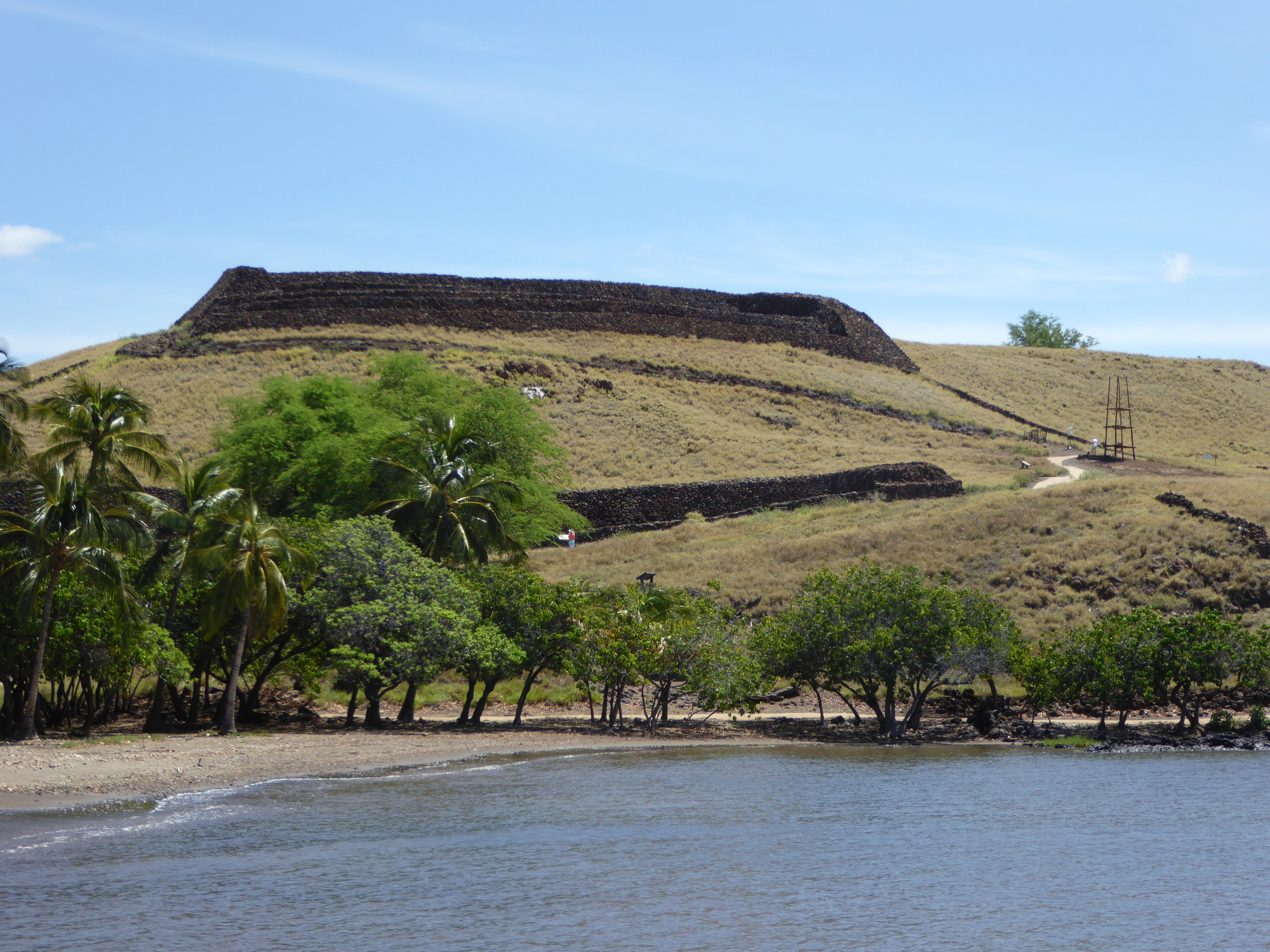
Puʻukoholā Heiau
Kohala · 1790–1791 CE
The most historically significant heiau in the Hawaiian Islands — built by Kamehameha I on the advice of the prophet Kapoukahi to fulfill a prophecy that he would unite all the Hawaiian Islands. The construction required thousands of workers who passed stones hand-to-hand in a human chain from Pololū Valley, 14 miles away. When completed, Kamehameha's rival Keōua Kuahuʻula was invited to the dedication — and was sacrificed at the altar, ending the wars of unification.
Deity: Kūkāʻilimoku
READ MORE →
Hawaiʻi Island
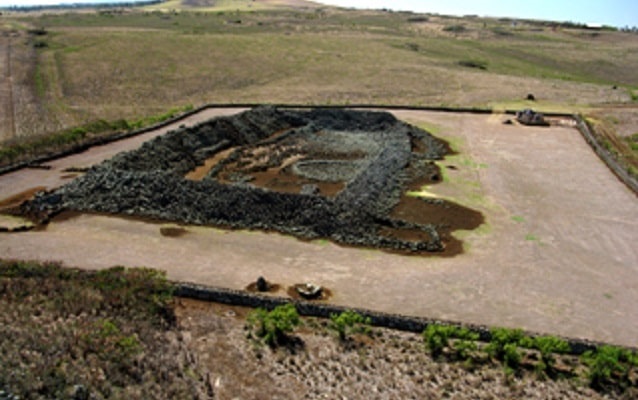
Moʻokini Heiau
Kohala · ~480 CE
One of the oldest heiau in Hawaii, said to have been built in a single night by the Menehune — 18,000 workers passing stones hand-to-hand from Pololū Valley, 14 miles away. The heiau was later rededicated by the high priest Paʻao, who arrived from Tahiti around 1200 CE and transformed Hawaiian religious practice by introducing the worship of Kū and the practice of human sacrifice. The heiau has been maintained by the Moʻokini family for over 50 generations.
Deity: Kū
READ MORE →
Hawaiʻi Island
Puʻuhonua o Hōnaunau
Kona · ~1550 CE
The Place of Refuge — the most important puʻuhonua (sanctuary) in the Hawaiian Islands. Those who had broken kapu (sacred law) — warriors defeated in battle, civilians caught in wartime — could find absolution here if they could reach it before being caught. The site is protected by the Great Wall, one of the most impressive dry-stone constructions in ancient Hawaii. Within the sanctuary stands the Hale o Keawe, a mausoleum heiau that once held the bones of 23 aliʻi.
Deity: Multiple aliʻi
READ MORE →
Hawaiʻi Island
Hale o Keawe
Kona · ~1650 CE
A mausoleum heiau within Puʻuhonua o Hōnaunau that once held the bones of 23 aliʻi. The bones of powerful aliʻi were believed to retain their mana after death — making this one of the most spiritually powerful places in all of Hawaii. The heiau was built by the great chief Keawe-i-kekahi-aliʻi-o-ka-moku, who was the grandfather of Kamehameha I's rival Kalaniʻōpuʻu. The bones were removed by Kamehameha I after the unification.
Deity: Ancestral aliʻi
READ MORE →
Hawaiʻi Island
Mailekini Heiau
Kohala · Pre-contact, modified ~1800 CE
Located adjacent to Puʻukoholā Heiau, Mailekini was an older luakini heiau that Kamehameha I converted into a fort with cannons after the unification of the islands. The conversion of a sacred temple into a military fortification reflects the profound transformation of Hawaiian society in the early 19th century — the old religious order giving way to the new political order of the unified kingdom.
Deity: Kū
READ MORE →
Hawaiʻi Island
Waha Ula Heiau
Puna · ~1200 CE
One of the oldest heiau on Hawaiʻi Island, said to have been built by the high priest Paʻao when he arrived from Tahiti. The name means 'red mouth' — a reference to the human sacrifices offered here. The heiau was partially destroyed by lava flows from Kīlauea in 1989 and 1997. Many Hawaiians interpret the lava's destruction of the heiau as Pele reclaiming her land.
Deity: Kū
READ MORE →
Hawaiʻi Island
Ahu a ʻUmi Heiau
Hāmākua · ~1500 CE
A large agricultural heiau in the upland district of Hāmākua, associated with the great chief ʻUmi-a-Līloa. The heiau was used for rituals to ensure the fertility of the land and the success of the crops. ʻUmi-a-Līloa was one of the most celebrated chiefs in Hawaiian history — a man of humble birth who rose to become the ruler of all Hawaiʻi Island through courage, wisdom, and divine favor.
Deity: Lono
READ MORE →
Hawaiʻi Island
Hikiau Heiau
Kona · Pre-contact
A heiau at Kealakekua Bay where Captain James Cook was received as the god Lono during the Makahiki festival in January 1779. Cook participated in a ceremony at this heiau that the Hawaiians interpreted as a ritual confirmation of his divine identity. His return out of season in February 1779 — after a storm damaged his ship — disrupted the sacred calendar and led to the confrontation in which he was killed.
Deity: Lono
READ MORE →
Oʻahu
Puʻu o Mahuka Heiau
North Shore · ~1600 CE
The largest heiau on Oʻahu, located on a bluff overlooking Waimea Bay on the North Shore. The heiau is a luakini (war temple) that stretches over 575 feet in length. It is said that three of Captain George Vancouver's crew members were sacrificed here in 1794. The heiau commands a sweeping view of the North Shore coastline and the ocean beyond.
Deity: Kū
READ MORE →
Oʻahu
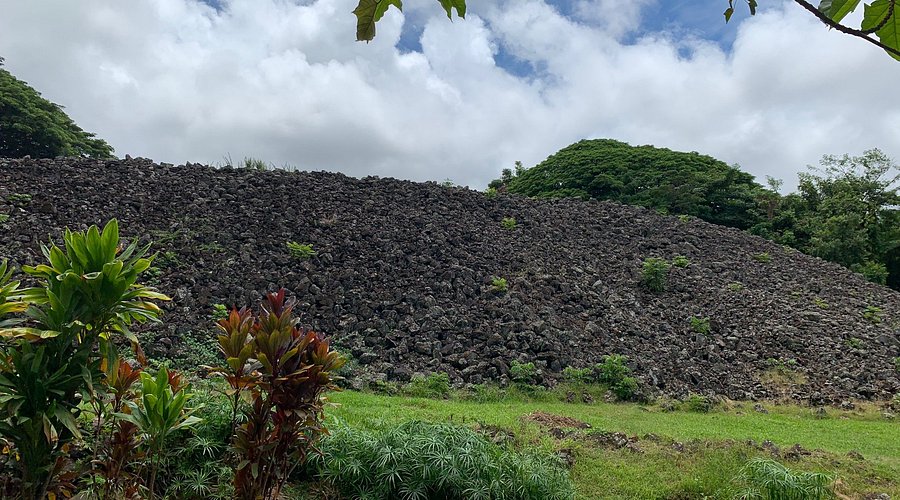
Ulupo Heiau
Kailua · ~900–1200 CE
A massive agricultural heiau in Kailua, said to have been built by the Menehune — the legendary small people of Hawaiian tradition. The heiau is 140 feet wide and 30 feet high, built from stones that were passed hand-to-hand in a human chain from Kailua Bay. It was used for agricultural rituals and is associated with the cultivation of taro.
Deity: Lono
READ MORE →
Oʻahu
Kukaniloko Birthing Stones
Central Oʻahu · ~1100 CE
The sacred birthing stones of Oʻahu, where aliʻi women came to give birth so that their children would be born with the highest possible mana. The birth of an aliʻi child here was attended by 36 chiefs who witnessed the birth and certified the child's rank. The stones are said to be the piko (navel) of Oʻahu. The site is surrounded by petroglyphs carved by the chiefs who attended royal births.
Deity: Multiple
READ MORE →
Oʻahu
Kāneʻohe Heiau (Kāniakapūpū)
Nuʻuanu · Pre-contact, used through 1847
A heiau in Nuʻuanu Valley associated with King Kamehameha III, who held a grand feast here in 1847 for over 10,000 people — one of the last great traditional Hawaiian feasts. The ruins of the heiau are still visible in the valley. The site is associated with the god Kāne and the sacred waters of Nuʻuanu.
Deity: Kāne
READ MORE →
Maui
Piʻilanihale Heiau
Hāna · ~1400–1600 CE
The largest heiau in all of Hawaii — a massive platform heiau in Hāna that covers nearly three acres. Built in stages over several centuries, it is associated with the great Maui chief Piʻilani, who unified Maui in the 15th century. The heiau's walls reach 50 feet in height and are constructed from basalt stones weighing up to several tons. The site overlooks the Hāna coastline.
Deity: Kū
READ MORE →
Maui
Haleʻkiʻi and Pihana Heiau
Wailuku · ~1240–1600 CE
Two adjacent heiau on a bluff overlooking the ʻĪao Valley and the central Maui valley. Haleʻkiʻi (House of Images) was a luakini heiau where carved wooden images of the gods were displayed. Pihana (Gathering Place of Supernatural Beings) was used for agricultural rituals. The two heiau together represent the dual nature of Hawaiian religious practice — war and agriculture, destruction and creation.
Deity: Kū
READ MORE →
Maui
Haleakalā Summit Heiau
Upcountry · Pre-contact
Multiple heiau sites at the summit of Haleakalā, the massive dormant volcano that dominates Maui. The summit was a place of profound spiritual significance — the site where the demigod Māui lassoed the sun to slow its passage across the sky. Priests would come here to observe the stars and perform astronomical calculations that governed the Hawaiian calendar.
Deity: Kāne, Lono, and the sun
READ MORE →
Kauaʻi
Alekoko Fishpond (Menehune Fishpond)
Līhuʻe · ~900 CE (traditional date)
The Alekoko Fishpond, known as the Menehune Fishpond, is said to have been built in a single night by the legendary Menehune people. The 900-foot stone wall that creates the fishpond is an extraordinary feat of engineering. The fishpond was used to raise mullet and other fish for the aliʻi. The Menehune legend associated with this site reflects oral traditions of a pre-Polynesian or early Polynesian population.
Deity: Kāne
READ MORE →
Kauaʻi
Poliʻahu Heiau
Wailua · Pre-contact
A large heiau in the Wailua River valley — the most sacred valley on Kauaʻi. The Wailua River was the royal river of Kauaʻi, and the valley was the center of political and religious life on the island. Poliʻahu Heiau was one of several heiau in the valley that formed a sacred complex used by the Kauaʻi aliʻi.
Deity: Kū
READ MORE →
Kauaʻi
Hīkina a ka Lā Heiau
Wailua · Pre-contact
The 'Rising of the Sun' heiau — located at the mouth of the Wailua River where it meets the ocean. The heiau was oriented to face the rising sun and was used for rituals associated with the sun god Kāne. It was the first heiau in the sacred Wailua River complex that pilgrims would encounter when arriving by sea.
Deity: Kāne
READ MORE →
Molokaʻi
ʻIliʻiliʻōpae Heiau
East Molokaʻi · ~1200 CE
The second largest heiau in Hawaii — a massive luakini heiau on the east end of Molokaʻi. Said to have been built by the Menehune in a single night, with stones passed hand-to-hand from Wailau Valley. The heiau was a place of great power and fear — it was used for human sacrifice and was associated with the most powerful kahuna on Molokaʻi, an island famous for its sorcerers.
Deity: Kū
READ MORE →
Lānaʻi
Kaunolu Village & Heiau
Southwest Lānaʻi · Pre-contact through ~1800 CE
The ancient fishing village of Kamehameha I — one of the best-preserved archaeological sites in Hawaii. The site contains the remains of over 80 house platforms, several heiau, and the famous Kahekili's Leap — a 62-foot cliff from which warriors would leap into the ocean as a test of courage. Kamehameha I used this village as a summer retreat.
Deity: Multiple
READ MORE →
Interactive Sacred Sites Map
View All Heiau on the Map
Explore all heiau and sacred sites on an interactive satellite map with clickable markers, side-panel information, and the ability to filter by island, type, and deity.
Open the Interactive Map →
Ohana System — The Hawaiian Social Network
Become a Member
The Ohana System is the private social network of Hale Kapu Moʻolelo a Aliʻi Ana — built exclusively for the 44,444 lineal descendants of the Hawaiian Kingdom. Membership unlocks the full Aliʻi System.
Exclusive Content
Unlock members-only courses, sacred archives, genealogy records, and cultural teachings not available to the public.
Build Your Own Store
Open your own vendor storefront in the Hawaiian Marketplace. Sell goods, art, clothing, and services directly to the community.
Unlock Your True Self
Discover your Hawaiian lineage, connect with your ancestral identity, and take your place among the 44,444 descendants of the Kingdom.